Manuscript vs Prefixed Leaves
The Confusion of the 1884 Numbering
Foliation, the numbering of manuscript leaves on recto folios, is critical for scholarly citations. After the theft of unnumbered leaves from manuscripts in 1867, Edward Augustus Bond, Keeper of Manuscripts from 1866-78, and his successor Sir Edward Maunde Thompson, Keeper from 1878-88, instituted a general refoliation of manuscripts to prevent further losses. As part of this exercise, Frederick John Mackney (1829-1901), an Attendant in the Manuscripts Department, renumbered the manuscript folios on the paper frames surrounding the folios of Cotton Vitellius A xv in June 1884. His colleague George Jacob Gatfield (1831-1901) rechecked his work.
The Department of Manuscripts today stands by the 1884 foliation and regards the MS foliation as obsolete. On the contrary, the MS foliation remains essential to Beowulf studies. Electronic Beowulf has always included the 1884 number next to the MS number on every facing page for reference purposes. However, the ill-advised 1884 renumbering has caused havoc by counting three random leaves that Sir Robert Cotton's binder prefixed to his new compilation of the Southwick and Nowell codices in Cotton Vitellius A. xv.
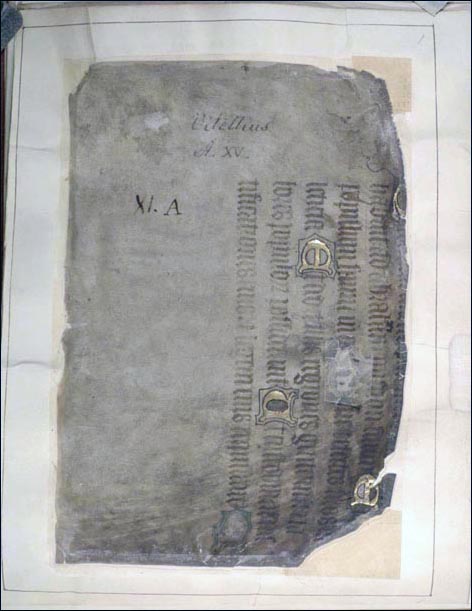
There is no reasonable justification for adhering to this 1884 foliation. What was once the first prefixed leaf, recto, is not even in the manuscript. It is now the verso of fol. 37 of Royal MS 13 D. i*, a reconstructed psalter from pastedowns, flyleaves, and binding strips. The fire-damage shows that it was placed in the codex sideways, with the verso on the outside, and with its left margin at the top.

What was once the second prefixed leaf is now by default the first prefixed leaf. It contains the flawed Table of Contents of Cotton's librarian Richard James (ca. 1628–38). James did not know how to describe the untitled Beowulf and so left a blank space of three or four lines for it between items 6 and 8. The verso is blank.
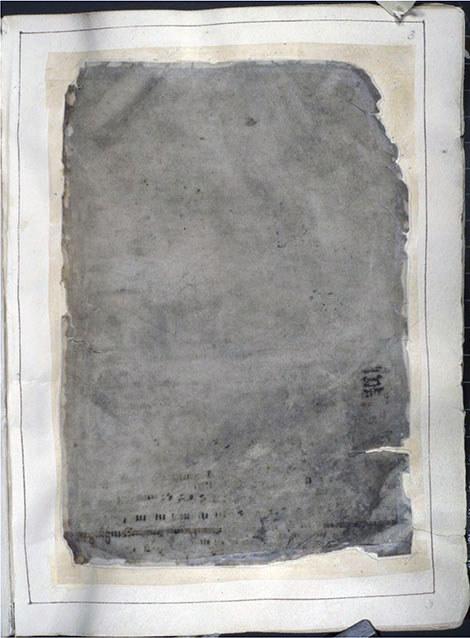
What was once the third prefixed leaf is now the second, but is fol. 3, according to the 1884 foliation written in the upper-right corner of the paper frame. It is an inverted palimpsest of a still unidentified Latin text. There are fifteenth-century notes in English and Anglo-Norman on the verso that are completely unrelated to the Southwick and Nowell codices.
The Manuscript Foliation
The manuscript foliation has a long history at the British Library. Inscribed at the turn of the nineteenth century for Principal Librarian Joseph Planta (1799–1827), it first appeared in print in 1802 in his A Catalogue of the Manuscripts in the Cottonian Library, Deposited in the British Museum. This revelatory foliation is straightforward, beginning with the first page of the Southwick Codex and numbering the vellum leaves sequentially through the Nowell Codex.
Some folios were out of place, including two from Beowulf, when this foliation was written in ink in the upper right corners of the vellum leaves recto. However, the enduring historical value of keeping the manuscript foliation is evident when dual numbers mark their correct location and former misplacement.
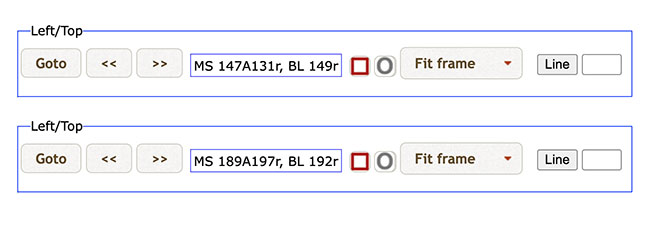
Two new numbers, 147A(131) and 189A(197), correct the manuscript foliation of Beowulf by recording the former misplacement (131 and 197) and relocating the leaves in the rest of the foliation 147A (before 147) and 189A (before 189). These dual numbers not only identify their correct relocation and former misplacement but also preserve information to discover the reasons for their misplacement.
1884 Re-numbering
The putative purpose of the 1884 foliation was to detect any later changes in the codices. The British Museum could have achieved the same result without abandoning the manuscript foliation by giving roman numerals to the three prefixed leaves, which would be the more sensitive curatorial procedure adopted today. The first prefixed leaf would have become roman numeral ii when roman numeral i was removed in 1913. The new British Library can easily reinstate the valuable manuscript foliation by renumbering these remaining prefixed leaves ii and iii, instead of 2 and 3.
Because of the 1884 numbers, needless confusion is manifest on every recto page. In this example manuscript folio 129, the first page of Beowulf, appears in black ink in the upper corner of the manuscript, while the 1884 number 132 contradicts it in pencil in the upper corner of the paper frame.
The digital version of Cotton MS Vitellius A xv in the British Library Digitised Manuscripts (on 28 July 2026) uses the 1884 foliation, but has added a further level of confusion. It has assigned folio numbers using lowercase roman numerals and square brackets to images of the various front and endpapers which were not foliated in 1884, so that Mackney and Gatfield’s foliation note is given the folio number [iii-r].
The Manuscript Foliation is critical for Beowulf studies. Knowledgable editors, scholars and students have always used the foliation written on the manuscript leaves, because Julius Zupitza had used it before 1884 in his transcription of the facsimile of the Beowulf manuscript. Long before Zupitza, John Conybeare ca. 1817 and Frederic Madden ca. 1824 used the manuscript foliation in their collations to identify and relocate the misplaced Beowulf folios, 147A(131) and 189A(197). Klaeber followed it in his editions of Beowulf and so have the recent editors of Klaeber 4.
Because the manuscript foliation will always be in ink on the Beowulf manuscript itself, as well as on its facsimiles, it is neither easy nor useful to abandon it for the confusing, poorly conceived 1884 renumbering. In 1983 the Danish Royal Library authorized the addition of the manuscript foliation numbers to the Thorkelin transcripts to simplify scholarly collation with the Beowulf facsimiles in Copenhagen. They accordingly appear in the facsimiles of these indispensable volumes in the fifth edition of Electronic Beowulf.
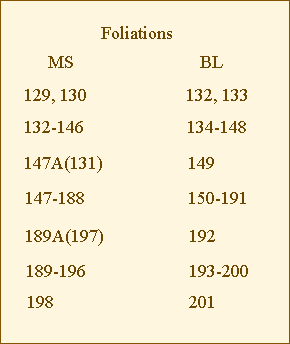
Some defenders of the 1884 foliation (BL in the chart) have mistakenly claimed that it is simply three numbers ahead of the MS foliation. In fact, as this chart confirms, the 1884 numbering is far from simple: it is two numbers ahead of the MS foliation for the first two folios; three ahead for the next fifteen; eighteen numbers ahead for the next folio (131); three numbers ahead for the next forty-two folios; five numbers behind the next folio (197); four numbers ahead of the next eight folios; and three numbers ahead of the final Beowulf folio.
The chaos of the 1884 foliation is easily fixed by reverting to the Manuscript Foliation with dual numbers for two folios, 147A(131) and 189A(197), which show where they belong and where they were formerly misplaced. The same clear, concise, and historically informative solution applies to the sixteen still misplaced leaves, 107(115)-114(122) and 115(107)-122(114), in Alexander's Letter to Aristotle in the Nowell Codex.